
Women have higher requirements for folate during pregnancy. An optimal folate status must be achieved before conception and in the first trimester when the neural tube closes.
Low maternal folate status is causally related to neural tube defects (NTDs). Many NTDs can be prevented by increasing maternal folate intake in the periconceptional period.
Dietary folate is protective, but recommending increasing folate intake is ineffective on a population level particularly during periods of high demands. This is because the recommendations are often not followed or because the bioavailability of food folate is variable.

Supplemental folate [folic acid (FA) or 5-methyltetrahydrofolate (5-methylTHF)] can effectively increase folate concentrations to the level that is considered to be protective.
FA is a synthetic compound that has no biological functions unless it is reduced to dihydrofolate and tetrahydrofolate.Unmetabolized FA appears in the circulation at doses of >200 μg. Individuals show wide variations in their ability to reduce FA.Carriers of certain polymorphisms in genes related to folate metabolism or absorption can better benefit from 5-methylTHF instead of FA.
5-MethylTHF [also known as (6S)-5-methylTHF] is the predominant natural form that is readily available for transport and metabolism. In contrast to FA, 5-methylTHF has no tolerable upper intake level and does not mask vitamin B12 deficiency.
Supplementation of the natural form, 5-methylTHF, is a better alternative to supplementation of FA, especially in countries not applying a fortification program. Supplemental 5-methylTHF can effectively improve folate biomarkers in young women in early pregnancy in order to prevent NTDs.

Folate (the salt of folic acid) is a vitamin the body needs for day-to-day functioning. It is required at higher doses during pregnancy, when it has an important role in preventing the formation of neural tube defects. Folate deficiency can cause glossitis, diarrhoea, gastrointestinal lesions, anaemia and poor growth.
The enzyme MTHFR is involved in the conversion of 5,10-methylenetetrahydrofolate to 5-methyltetrahydrofolate, which is the primary form of circulating folate in the blood. 5-methyltetrahydrofolate is involved in the remethylating of homocysteine to methionine, which is then converted to S-adenosylmethionine. This S-adenosylmethionine is then able to serve as a methyl donor in many varied methyl donor reactions throughout the cellular system.
Neural tube defects
The important role of folate in the prevention of neural tube defects is well known.14 Intuitively, therefore, polymorphisms that interfere with folate metabolism could potentially result in an increased risk of neural tube defects. However, in practice, studies both supporting and refuting this hypothesis exist.
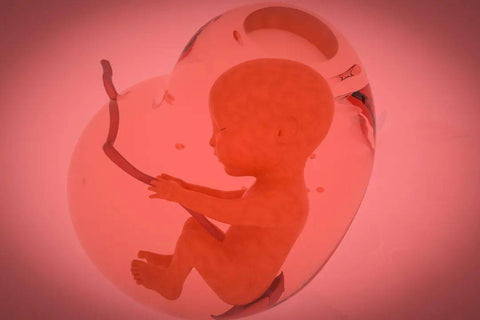
Given the prevalence of the MTHFR polymorphisms (60–70% of the population) and the frequency of neural tube defects (approximately 1 in 1000 in Australia), it is unlikely that the polymorphisms alone have a significant role in the formation of neural tube defects.
While there may be some increased risk of neural tube defects in individuals with the homozygous 677C>T variant, the level of risk has not been quantified and the impact of environmental factors, such as folate supplementation, has a more significant role. This has been demonstrated through a significant drop in neural tube defects when population-level fortification of folate occurs, with a decrease in the incidence of neural tube defects by about 70%.